
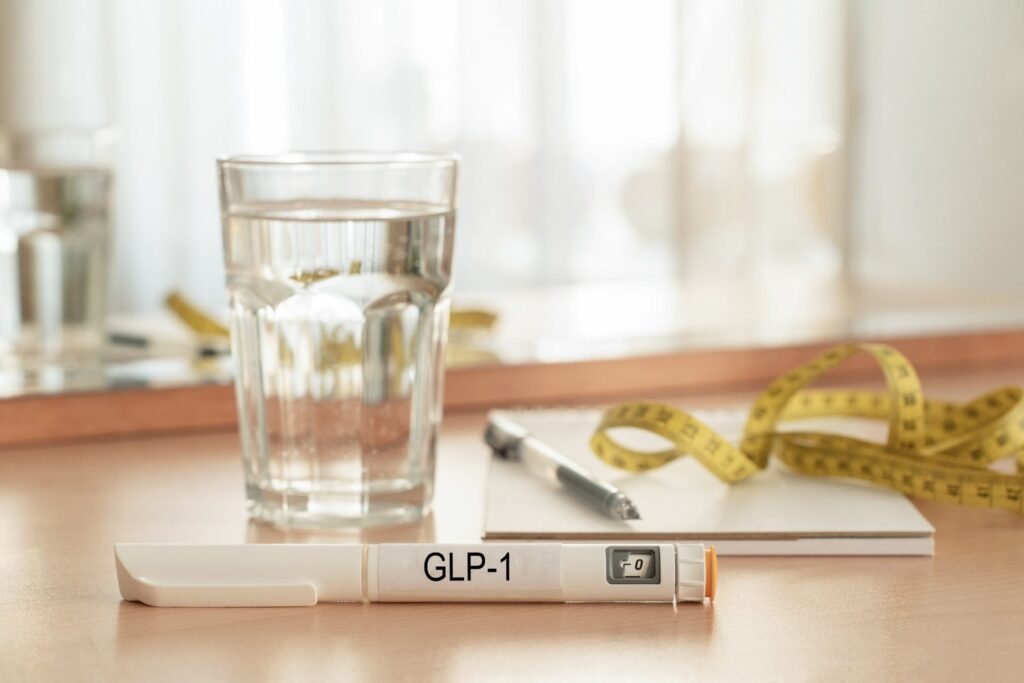
If you have been researching medical weight loss, two names probably keep appearing: semaglutide and tirzepatide.
Both have changed the way physicians can approach obesity and weight management. Both can reduce appetite and help people lose meaningful amounts of weight. But they are not the same medication, and choosing between them should involve more than asking which one produces the biggest number on the scale. Here is what you should know.
What is semaglutide?
Semaglutide belongs to a class of medicines known as GLP-1 receptor agonists.
GLP-1 is a hormone involved in appetite, digestion and blood sugar regulation. By acting on the GLP-1 pathway, semaglutide can help reduce hunger, increase feelings of fullness and make it easier for some people to consume fewer calories.
Semaglutide has been extensively studied for both diabetes and obesity, and formulations of the medication are approved for these uses in multiple countries.
What is tirzepatide?
Tirzepatide acts on two hormone receptors: GLP-1 and GIP. Both are involved in metabolic regulation, and tirzepatide’s combined action can affect appetite, food intake and glucose metabolism.
That difference is one reason tirzepatide has attracted considerable attention in obesity medicine.
Which produces more weight loss?
There is now direct clinical evidence comparing the two.
In the 72-week SURMOUNT-5 trial involving 751 adults with obesity and without type 2 diabetes, participants receiving the maximum tolerated dose of tirzepatide (10 or 15 mg) lost approximately 20% of their starting body weight on average, compared with approximately 14% with semaglutide (1.7 or 2.4 mg). Tirzepatide also produced a greater reduction in waist circumference. The study was randomized but open-label, meaning participants and investigators knew which treatment was being used.
Those are averages from a controlled clinical trial, not a prediction of what any individual patient will lose.
Results vary according to factors including starting weight, dose, tolerance, medical history, nutrition, physical activity and how consistently treatment is followed.
Does that mean tirzepatide is always the better choice?
No. Greater average weight loss in a clinical trial does not mean one medication is automatically the right treatment for every patient.
- your medical history and current health
- medications you already take
- previous weight-loss treatment
- blood sugar and metabolic health
- potential contraindications
- side effects and tolerability
- treatment goals and the amount of weight you may need to lose
This is why medical weight management should begin with an assessment, not a medication selection.
What about side effects?
Both medications can cause gastrointestinal side effects, particularly while doses are being increased.
These can include nausea, diarrhoea, vomiting, constipation and abdominal discomfort. In clinical studies, many gastrointestinal side effects were mild to moderate, but treatment still needs to be prescribed and monitored appropriately.
Not everyone is an appropriate candidate for these medications.
The medication is only part of the treatment
One of the biggest mistakes in thinking about medical weight loss is treating the injection as the entire programme.
Medication can help create something extremely valuable: progress. Progress can create momentum, but maintaining that progress also means building the nutrition, movement and everyday routines that can support your health beyond the initial period of weight loss.
At The Weight Clinic, we describe this as LOSE. BUILD. SUSTAIN.
LOSE: Create meaningful progress with a medically appropriate treatment plan.
BUILD: Develop practical nutrition, movement and everyday routines around that progress.
SUSTAIN: Protect what you have achieved through ongoing monitoring and an appropriate maintenance strategy.

If you are still deciding where to begin, our broader guide to GLP-1 weight loss in Jamaica explains how these treatments fit into medical weight management and why physician assessment matters.
So which one is right for you?
You do not need to decide that before seeing a physician.
Your starting point should be understanding your health, your weight history and your goals, then discussing the treatment options that may be appropriate for you.
At The Weight Clinic, that process begins with a consultation with Dr. Lorenzo Gordon, MD, MPhil, PhD, a physician, diabetologist, biochemist and clinical researcher with extensive experience in diabetes, obesity and metabolic health.
Physician consultation: J$10,000
Start with Dr. Gordon. Understand your options. Get a plan.
Sources: Aronne et al., New England Journal of Medicine, SURMOUNT-5 (2025); current obesity pharmacotherapy guidance. Clinical trial averages do not predict an individual patient’s result.